
My friend Maren has an eight-year-old, Teague, who stopped putting on his shoes last spring. Then he stopped doing nearly everything else she asked. She grounded him for a month. It didn’t work, and she ran out of things to take away. Then she tried again with a plan. That one worked. Here’s the core point. Parenting ODD goes better with steady habits at home plus formal parent training than with harsher punishment. Those habits come down to five checks: the diagnosis, the home routine, the consequences, the training program, and the school. This guide walks through each one, using Maren’s second attempt as the example.
What does ODD actually look like?
Oppositional defiant disorder is a pattern, not a bad week. The DSM-5 asks for at least four symptoms lasting six months or more. They fall into angry mood, argumentative behavior, and vindictiveness. The AACAP lists the same signs in its Facts for Families sheet No. 72. Teague lost his temper daily and blamed everyone else for his mistakes. He also seemed to enjoy annoying his sister. Maren said the blame was the hardest part. She never got an apology, only a list of reasons it was her fault.
Is it ODD or just a strong-willed kid?
A strong-willed child argues and then recovers. A child with ODD stays stuck, and the conflict spills into school or friendships. Only a clinician can tell them apart. ADHD, anxiety, and depression often show up alongside ODD, so psychologists usually collect parent and teacher reports on rating scales like the Vanderbilt or Conners. Maren’s pediatrician did exactly that. She wanted a label on day one. She got a form and a two-week wait instead.
Where should you start at home?
Start with one behavior. Mayo Clinic calls this picking your battles, and I think it’s the best advice on the list. Pick the one that affects safety first, like hitting or throwing things. Let the backtalk slide for now. Maren chose shoes, because the morning fight made everyone late. She wrote the goal on an index card in plain words. It said shoes on by 7:45. Teague could read it. That mattered more than she expected.
How should you give instructions to a defiant child?
Give short, positive, direct instructions, and say them once. “Shoes by the door, please” beats “Why can’t you ever keep your things where they go?” Then stop talking and wait. Maren used to repeat herself five times. Her instructions got louder each round. Teague learned that the first four didn’t count, which is exactly what repetition teaches. Now she says it once, stays close, and counts to ten in her head.
Does specific praise really matter?
Yes, and “good job” doesn’t count. Name the exact thing, as soon as it happens. “You put your shoes on the first time I asked” tells a child what to repeat. Kids with ODD often hear corrections all day long, so praise changes the ratio. Maren felt silly at first. Cooperation was rare, so she had a lot of chances. She said the first week she praised him maybe twice. By week three it was a dozen times a day.
What consequences work for ODD?
Small, immediate, and certain. Losing the tablet for one evening works better than losing it for a month you won’t enforce. Size matters less than follow-through. For time-out, a common rule of thumb is one minute per year of age, in a boring spot, though that’s a convention and not a studied dose. Maren dropped the month-long grounding on day one. Harsh or physical punishment tends to feed the conflict cycle, and the AACAP advises against it. Teague’s first week got worse, which is normal. A child who used to win by yelling will often yell harder before he stops.
Why do choices help a child with ODD?
Because many power struggles are really fights about who’s in charge. Two acceptable options give a child some control without giving up the rule. “Shoes before breakfast or right after?” worked for Teague about half the time. Half was plenty. Ross Greene’s Collaborative Problem Solving goes further. It treats defiance as a missing skill and solves problems with the child when everyone is calm. Maren read his book and kept the calm part.
How much one-on-one time does a child need?
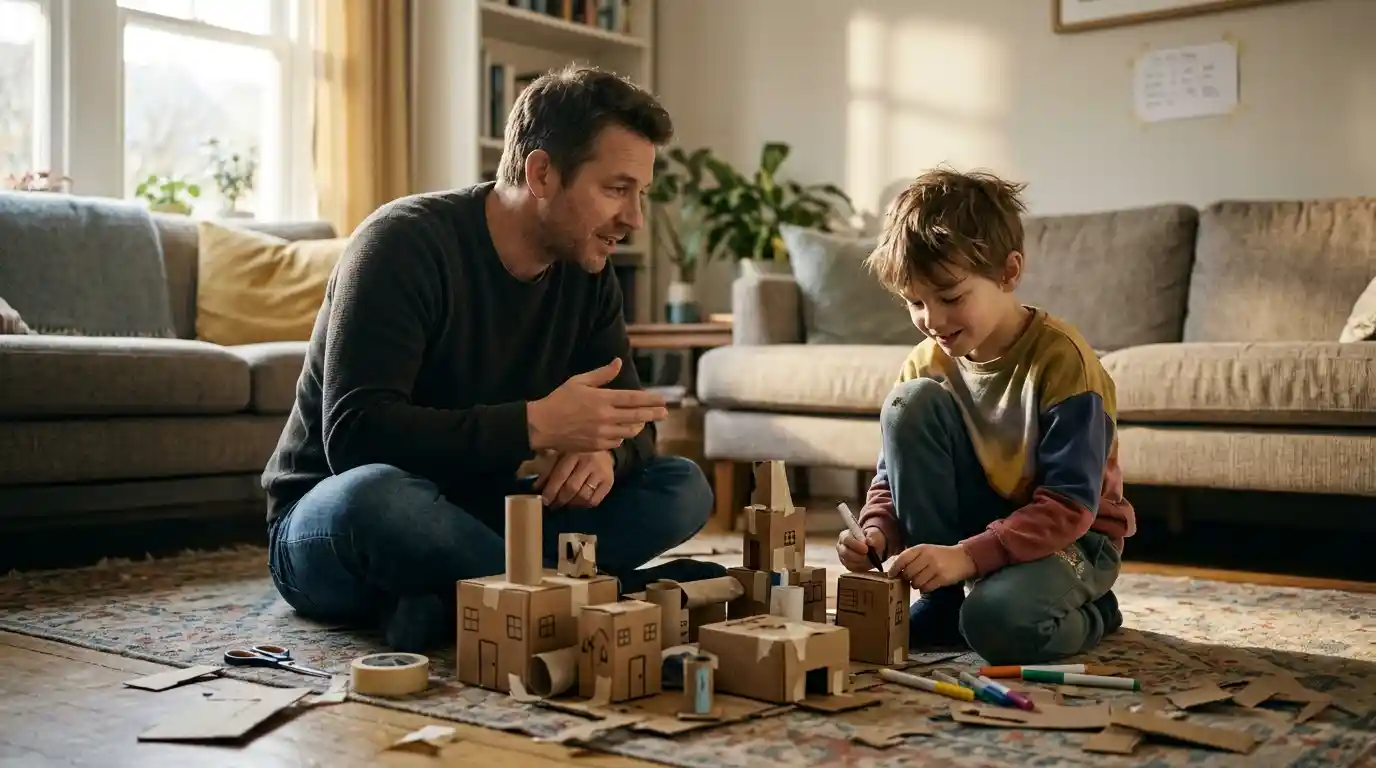
I couldn’t find a studied dose, so treat 15 minutes a day as a rule of thumb. Let the child pick the activity and keep corrections out of it. Parent-Child Interaction Therapy, designed for ages 2 to 7, builds this into its core. Maren and Teague built a cardboard city on the living room floor. She asked few questions. She mostly described what he was doing out loud, like a bad sports announcer. He rolled his eyes. He also asked to do it again.
What about your own temper?
It matters more than any script. Mayo Clinic specifically tells parents to manage their own stress, and I agree. Never lecture in the middle of a meltdown. Step away, breathe, and bring it up later when you’ve both cooled down. Maren said she lost it twice in the first month. She apologized both times, and she felt worse about it than Teague did.
Which parent training programs have evidence?
Parent management training is the first-line treatment for ODD. Triple P, PCIT, and Collaborative Problem Solving are the names you’ll see most. Triple P and PCIT have the larger research bases, as far as I know. CPS has a smaller one. Check current reviews before you pay for any of them. Maren found a free group through her county, with a therapist leading it. She skipped the programs with expensive branding. I’d do the same.
Does medication help with ODD?
Not for ODD itself. Medication isn’t the main treatment. Doctors tend to use it when ADHD, anxiety, or depression sits alongside the behavior problems. Maren asked about it at the first appointment and got a clear no. That relieved her.
How do you get an assessment and school support?
Start with your pediatrician and ask for a referral to a child psychologist or psychiatrist. Bring a log using the ABC format, which records what happened before, what your child did, and what happened after. Two weeks of notes tells a clinician more than memory does. For school, put your request in writing. In the United States that can lead to an IEP or a 504 plan. In the UK, talk to the SENCO. Maren asked for a daily school-home note and one adult Teague could go to when angry. His teacher agreed on the spot.
When is it an emergency?
Threats of self-harm, serious aggression, or a child who can’t stay safe need immediate help, not a behavior chart. Call local emergency services or a crisis line. In the United States, dial 988. Maren never needed it. I’d still keep the number somewhere handy.
Conclusion
On the last night of her group, the therapist asked each parent to share one win. Maren talked about shoes. Everyone laughed, and she didn’t mind. She kept the index card, softened at the corners now. Teague still argues, and parenting ODD never turned into easy. But last Tuesday he put his shoes on at 7:40 and waited by the door. He handed her a drawing of them.
FAQs
Can ODD go away on its own?
Many children improve with consistent parent training, and some no longer meet the criteria as they grow. Others develop related problems such as conduct disorder, which is why early help matters. Maren’s clinician planned a recheck every few months.
Does a child with ODD need medication?
Usually not for ODD itself. Medication isn’t the main treatment, and doctors tend to use it only when ADHD, anxiety, or depression is also present. Teague didn’t need any.
How do I discipline a child with ODD without yelling?
Use short instructions, small consequences right away, and a calm voice. If your anger rises, take a break before you respond. Maren’s rule was to step into the hallway and count to ten.
How early can a child be diagnosed with ODD?
It usually shows up in the preschool or early school years, and teens can be diagnosed too. If defiance has lasted six months or more and hurts daily life, ask for an assessment. Teague was seven when Maren asked.
Related reading: More support: parenting counseling, how parent-involved therapy works, and the 3-3-3 rule for calming anxious moments.
