
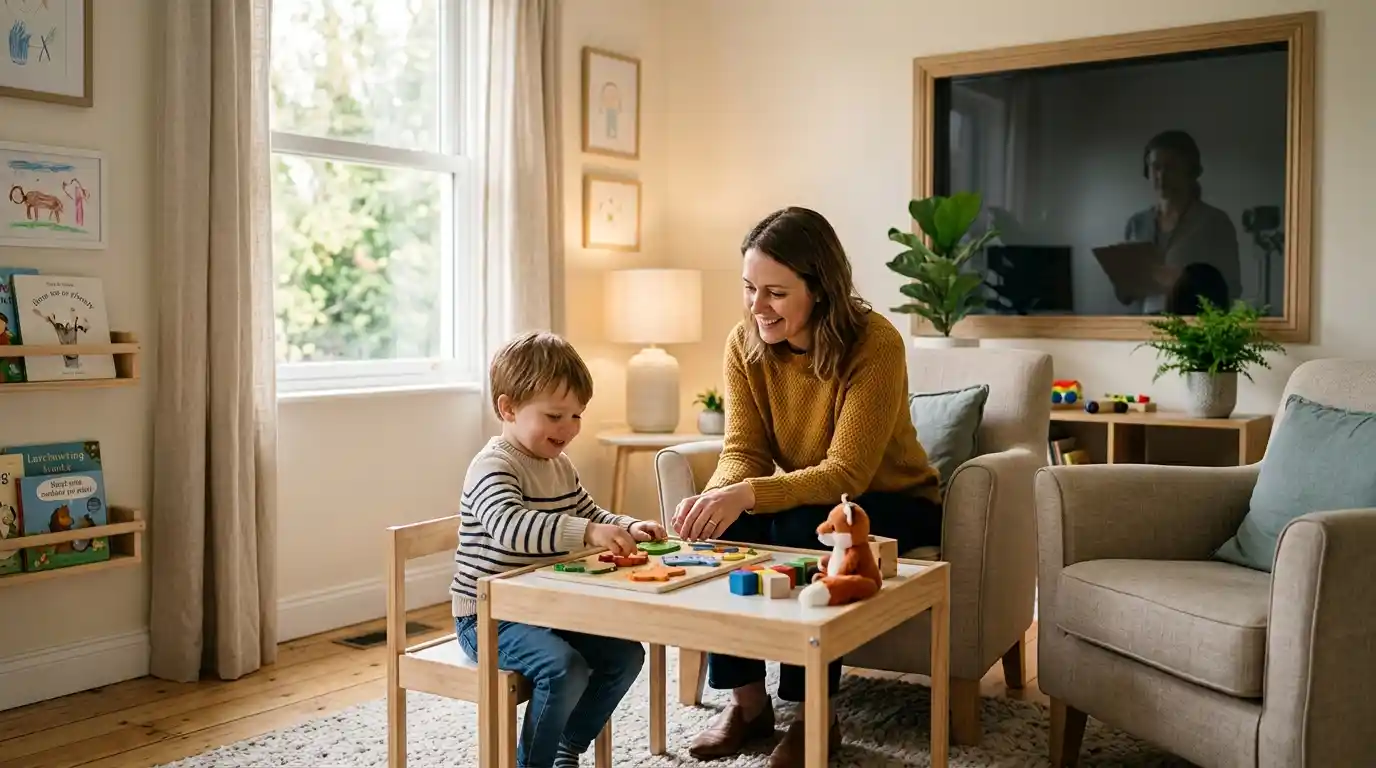
There’s a persistent assumption that therapy is something that happens to a child, with parents mostly waiting in the lobby. Parenting therapy treatment models that actively involve the parent as part of the intervention. Not just the person who drives to appointments challenges that assumption directly. And the research backing it is more substantial than most families realize.
This covers what parent involved therapy actually looks like across the major evidence-based models. What the data says about why it works. And how to figure out if it’s the right fit for your family’s specific situation. If you’re wondering whether your presence in the room actually matters clinically. The short answer is yes and the specifics of why are worth understanding before you start.
What Makes Parenting Therapy Different From Standard Child Therapy
Traditional child therapy often treats the parent as peripheral someone who provides history at intake. Then largely steps back while the therapist works one-on-one with the child. Parenting therapy flips that structure. Treating the parent-child relationship itself as the thing being treated, not just the child’s individual symptoms.
This distinction matters clinically, not just philosophically. A child struggling with defiance or emotional dysregulation doesn’t exist in a vacuum the daily interactions with a parent. The patterns of response and reaction built over months or years, are genuinely part of what’s maintaining the behavior. Address only the child’s internal experience and you’re working with half the actual system.
Is Parenting Therapy the Same Thing as Family Therapy?
Not exactly, though they overlap. Family therapy typically treats the broader family system, sometimes including siblings and extended dynamics. Parenting therapy is more specifically focused on the parent-child dyad and the skills, patterns. Or interactions between them, often with a narrower, more structured treatment protocol.
Parent-Child Interaction Therapy: The Model With the Deepest Research Base
Parent-Child Interaction Therapy, or PCIT, has been studied for well over four decades. And is one of the more rigorously tested parent-involved treatments available for young children with disruptive behavior. It’s built around live coaching a therapist observing parent-child play. Often through an earpiece, giving real-time feedback as the interaction happens rather than discussing it after the fact.
PCIT runs in two distinct phases. Child-Directed Interaction focuses on strengthening the relationship itself. Coaching parents in what’s sometimes called PRIDE skills praise, reflection, imitation, description, and enjoyment during child-led play. Parent-Directed Interaction shifts toward teaching clear, consistent commands and predictable consequences. Giving parents concrete tools for the moments where structure genuinely matters.
Does PCIT Actually Work, or Is This Mostly Theory?
The evidence is genuinely strong here, not just theoretical. Meta-analyses looking at PCIT’s effect on child behavior have found meaningful. Measurable improvements the kind of effect sizes that researchers consider clinically significant, not just statistically detectable. One well-cited Norwegian implementation study followed families over an extended period and found gains that held up well beyond the treatment’s end. Including improvements in both parenting skills and reductions in harsh parenting behaviors. If you want to verify the specific effect sizes, PubMed and PMC both index the relevant PCIT outcome literature under searches like “Parent-Child Interaction Therapy outcomes.” The numbers are publicly available rather than something to take on faith.
Who Is PCIT Actually Designed For?
Primarily children roughly ages two through seven dealing with disruptive or oppositional behavior. Though the age range can flex somewhat depending on developmental level and the specific clinic’s approach. It’s also been studied specifically within child welfare populations. Including families with a history of maltreatment, where the relationship repair component of the model carries particular weight.
Behavioral Parent Training and Related Models
PCIT isn’t the only structured, parent-involved model with real evidence behind it. Parent Management Training, Triple P Positive Parenting Program. And Incredible Years all fall under the broader behavioral parent training umbrella. And clinicians generally consider a small handful of these typically cited as the top four or so as having the strongest research support among behavioral interventions for childhood disruptive behavior.
These models share a common thread: they teach parents specific, observable skills consistent consequences, positive reinforcement. Clear communication rather than relying purely on insight-oriented talk therapy. The theory, well-supported by the outcome data. Is that changing the parent’s behavioral patterns changes the child’s environment in a way that produces more durable change than working with the child alone.
How Do I Choose Between PCIT, Triple P, and Incredible Years?
It depends heavily on your child’s age, the specific behaviors you’re dealing with, and honestly. What’s actually available and covered by insurance in your area. PCIT tends to suit younger children with more significant behavioral concerns and benefits from its live-coaching structure. Triple P and Incredible Years often work well in group or community settings and can suit a broader range of concerns, including milder behavioral difficulties.
Parent Involvement in Older Children and Teen Treatment
The evidence for parent involvement doesn’t disappear once kids age out of PCIT’s typical range. Research on adolescent anxiety and depression treatment consistently shows that parent involvement contributes to better outcomes, though the effect tends to be more modest than what’s seen in younger-child behavioral treatment which makes sense, given how much more autonomy and internal processing is involved in adolescent mental health compared to early childhood behavior.
This shows up in how clinicians actually practice, too. Surveyed therapists overwhelmingly report considering a child’s age and diagnosis when deciding how much to involve parents, and a majority specifically cite parental stress level as a factor shaping their approach suggesting parent involvement isn’t applied as a blanket rule but adjusted to what the family actually needs.
How Much Should Parents Be Involved in a Teenager’s Therapy?
Less directly hands-on than with a young child, but still meaningfully present typically through collateral sessions, periodic check-ins, and supporting skill practice at home rather than sitting in on every individual session. Adolescents generally need more privacy and autonomy in their own therapeutic work, and most clinicians balance that against genuine parent involvement rather than choosing one extreme or the other.
What Actually Happens in a Parenting Therapy Session
Sessions vary by model, but most parent-involved approaches share a general rhythm: an intake phase gathering history and setting goals, active skill-building sessions (sometimes with live coaching, sometimes through discussion and role-play), and homework actual practice between sessions, since a weekly hour of therapy alone rarely produces change without consistent application the rest of the week.
Between-session support, whether through phone check-ins or brief practice logs, tends to correlate with better outcomes and higher treatment completion rates. This isn’t surprising once you think about it: a parent who’s actively practicing new skills at home, and getting some support troubleshooting when it doesn’t go smoothly, is going to see more consistent progress than one attending sessions passively.
How Long Does Parenting Therapy Typically Take?
This varies significantly by model and the severity of what’s being addressed, but many structured behavioral programs run somewhere in the range of several weeks to a few months of consistent sessions, with some families continuing longer for more complex or entrenched patterns. Ask your specific provider for their typical treatment length rather than assuming a universal timeline, since this genuinely differs across models and individual cases.
Conclusion
Parenting therapy works because it treats a real, well-documented gap in traditional child treatment: the parent-child relationship itself as a legitimate target for intervention, not just background context. Models like PCIT carry decades of research support, and even in adolescent treatment, where kids need more independence, parent involvement still measurably helps. If your family’s dealing with behavioral struggles, emotional dysregulation, or relationship strain that individual child therapy alone hasn’t resolved, asking a provider specifically about parent-involved models is a reasonable, well-supported next step and if safety concerns are part of what’s driving the search for help, that’s worth raising directly and urgently with a professional rather than waiting.
FAQs
Parenting therapy actively involves the parent as part of the treatment itself often through live coaching or skill-building while traditional child therapy typically works one-on-one with the child, with parents playing a more peripheral role.
PCIT is specifically designed and most heavily researched for children roughly ages two through seven, but parent involvement remains valuable for older children and teens through other models, just with a different structure suited to greater independence.
Ask for referrals from your pediatrician or school counselor, and specifically verify certification for structured models like PCIT, since training and credentialing requirements vary and not every general family therapist has this specific training.

2 thoughts on “Parenting Therapy: Why Parent Involvement Changes Outcomes More Than Most Families Expect”