
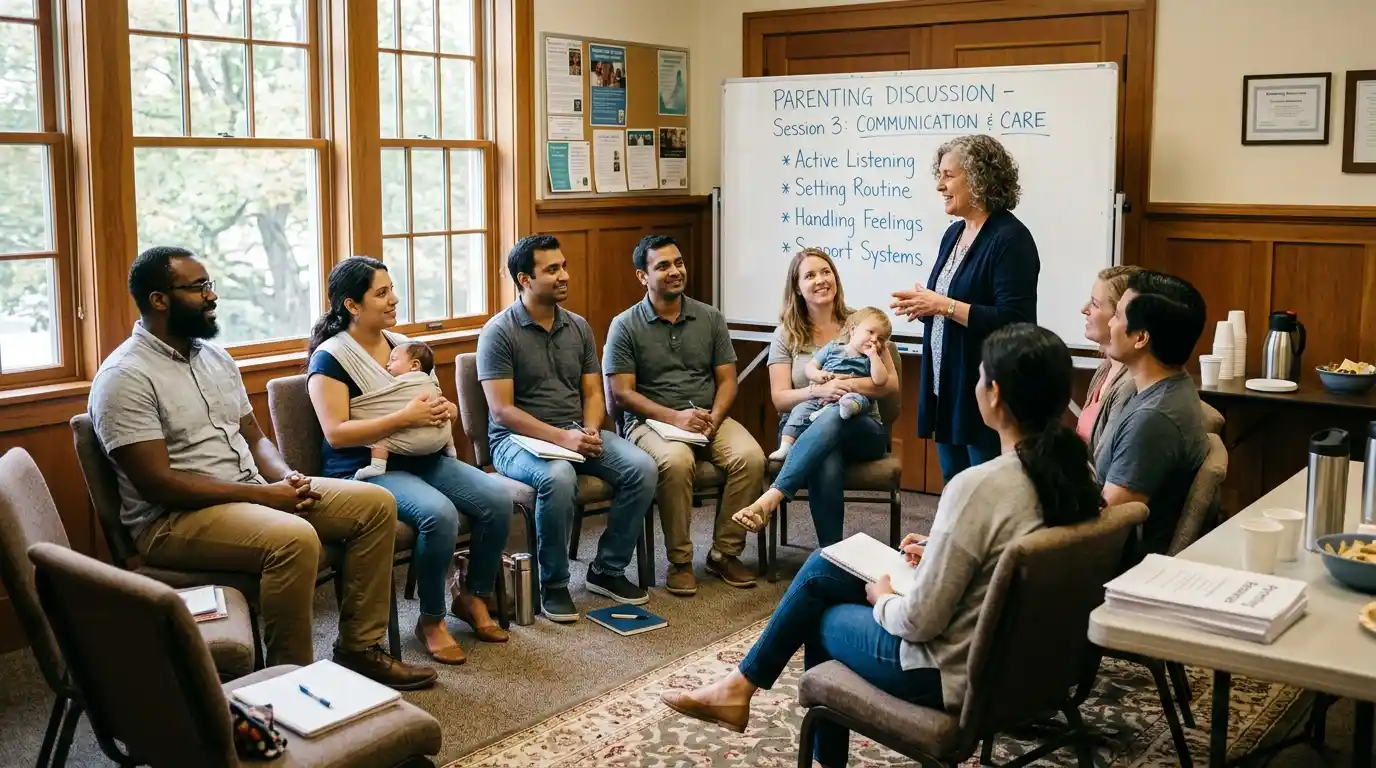
If a judge or caseworker told you to take a parenting class, you probably searched exactly this phrase within minutes of leaving that conversation. Fair enough. But “parenting classes near me” turns up a genuinely confusing mix of court-mandated courses, general parenting workshops, and online programs of wildly varying legitimacy, and picking the wrong one can mean redoing the whole thing on a deadline.
This covers what actually separates a court-approved class from a generic one, what these courses typically cost, how long they run, and the specific things worth confirming before you hand over payment. Some of this you’ll need regardless of whether a court is involved at all.
Court Ordered vs. General Parenting Classes
Not every “parenting class” search is about the same thing, and conflating them wastes time. One category is court-ordered required as part of a divorce, custody case, or sometimes a child-protective-services referral. The other is just general parenting education, taken voluntarily because someone wants better tools for handling a toddler’s meltdowns or a teenager’s silence.
The court-ordered kind has real stakes attached. Miss the requirement or take a course the court doesn’t recognize, and you’re back where you started, possibly with a deadline that’s now tighter. General classes don’t carry that pressure you can take one, hate it, and try a different approach next month with zero consequences.
How do I know if I need a court-approved class specifically?
Check your court order or the paperwork from your caseworker it should state explicitly whether the class needs court approval, and often names a specific program or gives criteria the course must meet. If it just says “complete a parenting class” with no further detail, call the court clerk’s office directly and ask. I wouldn’t guess on this one; a wrong assumption here costs you actual time.
What Court Approved Actually Means
“Court-approved” gets thrown around loosely by a lot of online providers, and some of that is marketing more than fact. A course being accepted somewhere doesn’t mean it’s accepted in your specific judicial district.
Providers will often advertise broad coverage accepted across most states, recognized by thousands of courts and counties nationwide. Numbers like that sound reassuring, and they might genuinely be accurate for that provider. But “most courts” isn’t “your court,” and the gap between those two things is exactly where people run into trouble.
Will an online class actually satisfy my specific court order?
Call your court clerk or ask your attorney before assuming yes providers can claim broad approval while your specific judge or county still requires something different. This is the single most important verification step in the entire process, and skipping it is the most common mistake people make when they’re in a hurry to just get the requirement done.
Some providers offer a money-back guarantee tied specifically to court approval, which at least signals some confidence on their end. Still verify independently. A refund doesn’t undo a missed deadline.
What These Classes Actually Cost
Pricing for online court-related parenting classes tends to land in a fairly narrow, predictable band, which honestly makes comparison shopping easier than most legal-adjacent services.
Expect somewhere around $25 to $47 for most self-paced online options, with course length usually running from two hours up through twelve, depending on what your specific court requires. A basic co-parenting communication course might run closer to $25 to $30, while longer, more comprehensive programs covering child development and conflict resolution in depth push toward the higher end of that range.
Are free parenting classes actually available?
Yes, though usually not for court-ordered requirements libraries, hospitals, and community centers frequently offer free general parenting workshops, and some counties run no-cost programs through social services. If your court order doesn’t specify a paid, approved provider, checking your local library or a nearby family resource center first can save you the fee entirely.
How Long Does a Parenting Class Actually Take?
Length varies more than people expect going in, and it’s almost always dictated by the court order itself rather than personal preference.
Shorter two-hour options exist for lower-stakes situations sometimes a first-time, lower-conflict co-parenting requirement. On the other end, courses running eight to twelve hours are more common for cases involving higher conflict, custody disputes, or situations where a judge wants more substantial engagement with the material before signing off.
Can I finish a parenting class in one sitting?
Most self-paced online courses let you start and stop as needed, so a four-hour course doesn’t have to happen in one continuous session. That flexibility matters if you’re doing this around work or childcare, though I’d still recommend finishing within a few days rather than dragging it out momentum through the material tends to help it actually stick, and courts sometimes have their own completion-window requirements too.
Finding a Legitimate Class Near You
Beyond court requirements, plenty of people are just looking for solid, practical parenting education, and the search process here is a bit more forgiving.
Where do I look for parenting classes besides searching online?
Check with your local hospital, public library, school guidance office, or a nearby family resource center many run free or low-cost parenting workshops that never show up prominently in a general web search. Community centers and religious institutions in many areas run similar programs too, often with the added benefit of meeting other local parents going through similar stages.
What should I look for in a general parenting class?
Look for programs led by a licensed child psychologist, family therapist, or certified parent educator rather than an unaccredited course with vague instructor credentials. Reviews and ratings on Google or Yelp can help filter options quickly, and a program that’s been running for years with consistent positive feedback is usually a safer bet than something brand new with no track record yet.
Red Flags Worth Watching For
A handful of provider practices are worth treating as warning signs rather than dismissing as normal industry variation.
Vague claims about court acceptance without naming specific states or counties should prompt a follow-up question, not blind trust. Pressure to pay immediately without a clear syllabus or course outline is another one legitimate providers are generally happy to show you what the course actually covers before you commit financially. And if a provider can’t clearly explain what happens if your specific court rejects their certificate, that’s worth treating as a real gap rather than a minor detail.
What if my court rejects a completed class?
Contact the provider first, since many offer a refund or free retake specifically for this situation, then go back to the court clerk to clarify exactly what would satisfy the requirement instead. This is genuinely rare if you verified approval upfront, which is exactly why that first step matters as much as it does.
Conclusion
Parenting classes near me searches split into two very different needs a court deadline with real consequences, or general parenting education with none. Treat them differently. For court-ordered classes, verify approval with your specific clerk before paying anything, regardless of how confident a provider’s marketing sounds. For general education, your local library or hospital might already offer something free and genuinely useful. Either way, confirming the specifics upfront saves more time than it costs.
FAQs
Not universally while many providers cover a large number of states, acceptance ultimately depends on your specific judicial district, so it’s worth confirming directly with your court clerk before enrolling.
Most self-paced online options run somewhere between $25 and $47, with pricing generally tied to course length and depth rather than varying dramatically by provider.
Course length typically ranges from two to twelve hours depending on what your specific court order requires, with most self-paced programs letting you complete the material across multiple sessions.

3 thoughts on “Parenting Classes Near Me: 5 Things to Check Before You Register”