
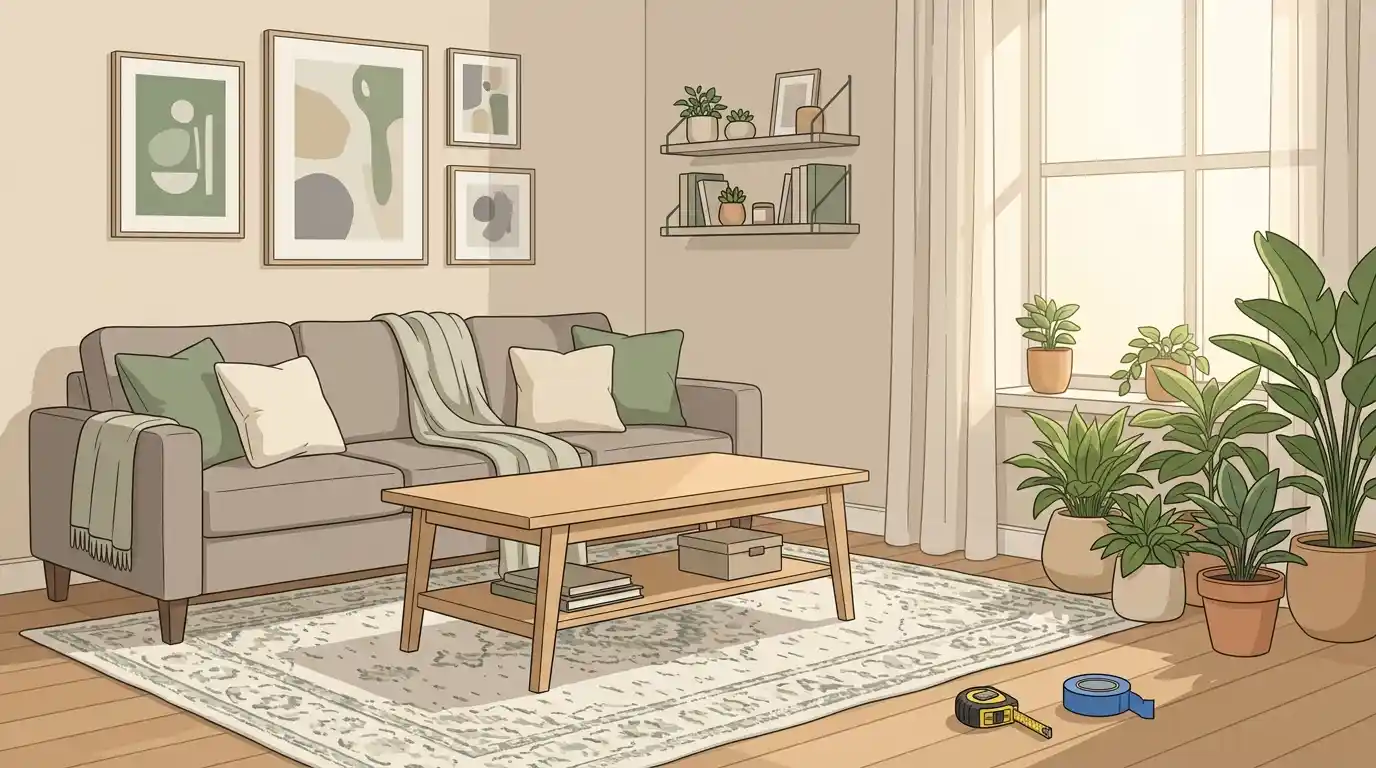
Furnishing a living room is where budgets go to die. You see a low price. You click. After just eight months, the cushions have lost their shape, and the frame has started to creak. Sound familiar? Here’s the good news. Living room furniture on a budget can still last, as long as you spend on the right parts and skip the wrong ones. This guide covers three myths worth dropping, five rules that actually save money, and the measuring steps people forget. I checked facts against furniture guides and layout sources and note where they came from. I’m not quoting price tiers, because the numbers I found were all over the map.
Three Myths That Waste Your Money
Most budget regrets start with bad assumptions. Three show up constantly.
None of them is dumb. They just cost people real money.
Does cheap always mean it won’t last?
No. Price matters less than what’s inside. A cheap sofa with a decent frame can outlast a pricey one with a weak frame. Look at construction, not the tag. HGTV’s sofa guide says the best wood frames use kiln-dried hardwood or high-ply plywood, and that particleboard is less durable. hgtv
Should I buy the whole set at once?
Usually not. Sets look neat in photos, but they lock you into pieces you may not need. Buy the sofa first. Add the rest over time. Mismatch fears are overrated, especially if you stick to one color family.
Does a good look mean good quality?
Never. Fabric and styling hide everything. Frames, springs, and foam do the real work, and you can’t see them in a photo. That’s why the next section matters.
5 Rules for Living Room Furniture on a Budget
Here’s the short version. Spend where it’s hidden. Save where it’s visible. Every rule below includes a simple check you can perform in-store or on the product’s website.
What should I spend the most on?
The sofa. It gets used every day, so it earns the biggest share of your budget. That’s my own rule of thumb, not a tested ratio. Tables, shelves, and décor can come cheap and still do fine.
How do I check a sofa’s frame?
Do the wiggle test. One guide says to hold a corner and wiggle the frame, which should feel solid, with no give in the joints. If a budget is tight, one source suggests plywood frames at least 11 to 13 layers thick. Online? Read the product page for frame material. No mention is a warning sign. hgtvqanvast
What about springs and foam?
Look for sinuous springs. They’re the budget-friendly option. A Houzz guide notes sinuous S-shaped springs can provide nearly as much comfort as eight-way hand-tied ones. For foam, one guide says to look for high-density cushions rated at 1.8 pounds or higher. Another recommendation is to choose foam with a density of at least 2.0 pounds per cubic foot for sofas used daily. If a brand won’t tell you the density, ask. The Essential Sofa Buying Guide +2
Which fabric holds up?
Go synthetic if you’ve got kids or pets. A buying guide says synthetic fabrics are generally more durable, colorfast, and cleanable. Removable, washable covers are even better, since you can fix a spill instead of living with it. houzz
Where do I find deals?
Try secondhand sources, clearance sections, and floor models. This is my own advice, not a researched ranking. Whatever you buy used, run the wiggle test and sit on it for a few minutes. Smell it too.
Measure Before You Order
Wrong-size furniture is the most expensive mistake on this list. It’s also the easiest to avoid.
Grab a tape measure. Write numbers down. Spending just ten minutes on this can help you avoid return fees, unnecessary hassle, and even damage to your doorframe.
How far should the sofa and coffee table sit?
Leave 14 to 18 inches between them. Several layout sources agree, including one that says to keep around 14 to 18 inches between the sofa and coffee table, and main walkways at least 30 inches wide. Also, match heights. A coffee table should sit level with the seat or up to two inches lower. costwaylazada
How big should the coffee table be?
About half to two-thirds the length of your sofa. One guide gives the range as between one-half and two-thirds of the total seating length. A 60-inch sofa pairs with a table around 30 to 40 inches long. lazada
Will it fit through my door?
Check before you buy. Measure doorways, hallway turns, stairs, and elevators. One design guide says to compare furniture depth to your narrowest opening. Sofas with removable legs help in tight spots. lekkerhome
Can I preview the size?
Yes. Stick painter’s tape on the floor in the footprint of the piece. One source recommends exactly that: lay painter’s tape on the floor in the exact footprint of the table. Do the same for the sofa. Walk around it for a day. ashdeco
Small Rooms Need Different Moves
Tight spaces punish bulky furniture. A big sectional can swallow a small room whole.
So think smaller, lighter, and flexible. Pieces that do two jobs earn their spot.
What sofa size works in an apartment?
Apartment sofas typically run 72 to 84 inches wide, according to one layout guide, which says they maintain smooth circulation. A loveseat under 72 inches works in very small rooms. Keep a 30-inch path through the main walkway. homestyler
Which pieces earn their space?
Storage ottomans, lift-top coffee tables, and slim wall shelves. They hide clutter and free up floor. A fold-away or nesting table helps when guests come over. Skip anything bulky that does only one thing.
Conclusion
Living room furniture on a budget works when you spend on structure and save on style. Check the frame. Ask about foam. Choose cleanable fabric. Measure everything, then tape it out on your floor. Buy the sofa first and let the rest follow. Done right, a modest budget gets you furniture that lasts years, not months. Start this weekend with a tape measure and a roll of painter’s tape. Ten minutes of planning beats an expensive return.
FAQs
What is the most important piece to spend on in a living room?
Spend the most on the sofa, since you use it daily. Check the frame, foam density, and springs. Save on tables, shelves, and décor.
How do I know if a cheap sofa is good quality?
Wiggle the frame. It should feel solid with no loose joints. Look for a hardwood or high-ply plywood frame, sinuous springs, and high-density foam. Avoid particleboard.
How far should a coffee table be from the sofa?
Leave about 14 to 18 inches between them. That’s close enough to reach, but open enough to walk through. Keep main walkways at least 30 inches wide.
Is it okay to buy living room furniture piece by piece?
Yes, and it’s usually smarter. Buy the sofa first, then add tables and chairs as your budget allows. Stick to one color family so mismatched pieces still look planned.

2 thoughts on “Living Room Furniture on a Budget: 5 Rules That Save You From Regret”