
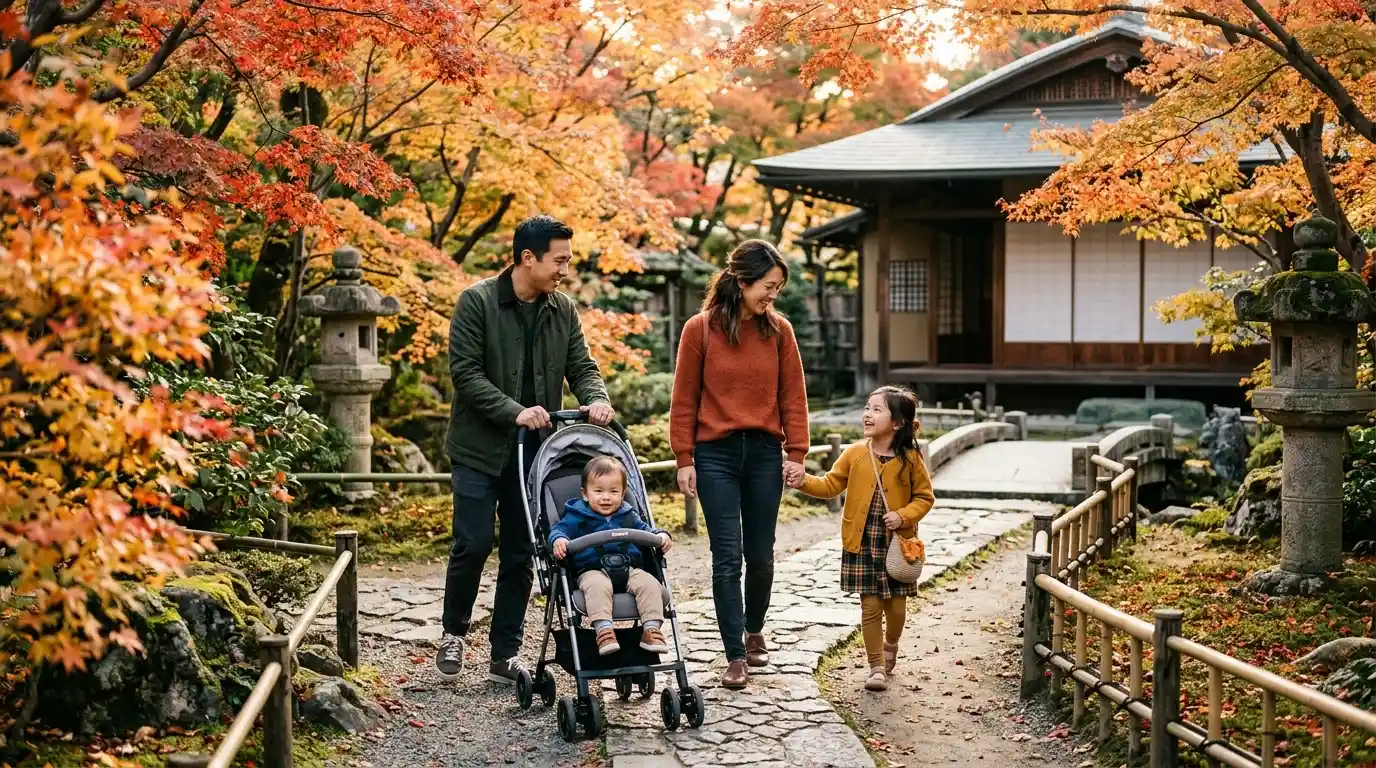
Took my daughter to Japan right after she turned three. Booked five cities in ten days. Guidebook made it look easy. Total disaster by day four. Meltdown at Fushimi Inari, a missed nap that wrecked the whole afternoon, me and my husband barely talking by dinner. Cut the rest down to two bases, one big thing a day. Whole trip changed. Family travel with kids isn’t really about the destination. It’s about pacing everything around a small person’s sleep, not your own itinerary fantasy. Here’s what actually worked, timing, packing, and a real breakdown of how we fixed Japan halfway through.
How Do You Plan Family Travel With Kids Without Overdoing the Itinerary?
Most parents plan their first big trip like they’re still traveling solo. Ten-day guidebook itineraries, built for adults with no naps and endless patience for train transfers. Kids don’t work that way. One or two real activities a day, that’s the ceiling for most kids under six. Everything else is filler. The downtime matters just as much as whatever’s on the itinerary, more probably.
Learned this backwards, obviously. Five cities deep before admitting the plan was the problem, not my kid. Cut Kyoto and Osaka down, added actual rest afternoons. Second half of that trip turned into something we’d genuinely want to repeat.
How Many Activities Should You Plan Per Day With Young Kids?
One or two, max, under age six or seven. Morning activity, lunch, a nap or quiet downtime, maybe one more low-key thing before dinner. Three or four sights sounds efficient on paper. In practice it guarantees a meltdown around 3pm, usually right when you’re furthest from the hotel.
What’s the Best Age to Start Traveling Internationally With Kids?
Earlier than most first-timers assume, honestly. Babies around 3 to 9 months travel surprisingly well. Not mobile yet, sleep a lot, haven’t hit the stranger anxiety that shows up later. The genuinely hard stretch is 12 to 18 months. Walking, but no real words yet. Rough combination on a long flight.
Toddlers past two and a half get easier again once language kicks in. My daughter at three understood “big plane, then sleep, then we see the deer.” Made the Nara day trip go smoother than half the adult-only trips I’ve been on.
Is It Easier to Travel With a Baby or a Toddler?
A baby under nine months, usually easier than a toddler between one and two. Babies sleep more, aren’t mobile, don’t have the frustration of wanting independence yet. The 12-to-18-month window’s the hardest stretch for most families. Mobile enough to want out of every seat, too young to reason with about waiting.
How Do You Handle Jet Lag and Sleep Schedules When Traveling With Kids?
This is the part that made or broke Japan for us. A one to two hour time difference barely registers on a kid. Three to five hours, which covers most US-to-Japan or US-to-Europe trips, takes real adjustment. Two to four days usually, before sleep settles into the new time zone.
Shifting bedtime by 30 minutes a day the week before helps some kids ease in early. Natural daylight did more than any trick I tried though. Morning light at the destination reset my kid’s clock faster than a dark hotel room fighting a nap three hours off schedule ever did.
How Long Does It Take a Toddler to Adjust to Jet Lag?
Two to four days, typically, across a three to five hour time difference. Expect early wake-ups and off-schedule naps that whole stretch, not something you fight outright. Building slower mornings into the first few days, instead of an early activity, saves everyone a preventable meltdown.
What Should Go in a Family Travel Packing List by Age?
Packing changes a lot by age. Copying a generic Pinterest list usually means overpacking stuff your kid’s outgrown, or forgetting something they still need. Babies need diapers, bottles or formula, and a comfort item that smells like home, that last one matters way more than people expect for sleep somewhere new. Toddlers need snacks, two spare outfits minimum in the carry-on, something to keep hands busy during a delay.
School-age kids need less gear, more entertainment. Download shows before boarding, airport wifi’s never reliable enough to trust mid-flight. One rule across every age though. Pack less clothing than feels comfortable. Most places have laundry access or at least a sink and a detergent packet. Dragging six outfits per kid through three cities gets old by day two.
What’s the One Thing Parents Always Forget to Pack?
A backup comfort item, or just not letting the only one out of your sight. Losing the one stuffed animal a toddler sleeps with mid-trip is its own category of disaster. Wrecks bedtime for days after. Pack a backup if it’s replaceable, or keep it in the carry-on, not checked luggage where it can actually vanish.
Japan With Kids: A Real Example of Pacing a Family Itinerary
Japan gets recommended constantly for family travel, and it earns it, clean, safe, genuinely stroller-friendly once you know which stations have elevators. But the standard Golden Route, Tokyo, Kyoto, Osaka, all in one trip, assumes adult stamina for train transfers and repacking every two nights. Fewer bases wins every time with young kids.
Two bases instead of three worked far better for us the second time. Tokyo four nights, Osaka the rest, Kyoto and Nara as day trips instead of separate hotel stays. Kids under six ride Japanese trains free. Fares run half price for kids six to eleven. Makes day-tripping cheaper than most parents expect. A rough budget for four people over ten days lands near $9,500 all-in, hotels, trains, food, activities, though season and hotel choice move that number a lot.
How Many Cities Should You Visit in Japan With Young Kids?
Two, realistically, not the standard three-city Golden Route built for adults. Base in Tokyo and Osaka. Treat Kyoto and Nara as day trips by train instead of their own hotel stays. Cuts down on the packing and unpacking that eats into naps and patience both.
Conclusion
Family travel with kids works best when you plan around their schedule, not the guidebook’s. Cap activities at one or two a day. Build in real downtime. Expect a few rough jet-lag days before things settle. Fewer cities, longer stays, slower mornings, all beat a packed itinerary. Ask me how I know.
FAQs
What’s the best age to take a baby on their first international flight?
Babies between 3 and 9 months old generally travel well, since they’re not yet mobile and haven’t developed separation anxiety. The 12 to 18 month range is harder, mobile but too young to reason with about waiting.
How do you keep a toddler entertained on a long flight?
Bring downloaded shows, a couple small surprise toys they haven’t seen yet, and child-safe headphones, since airport wifi rarely holds up for streaming mid-flight. Spacing out small surprises through the flight beats handing over everything at once.
How many days does it take a kid to adjust to jet lag?
Most kids need two to four days for a three to five hour time difference. Morning light at the new destination resets their clock faster than staying indoors during the adjustment.
Is Japan a good destination for family travel with young kids?
Yes, genuinely one of the easier international spots for families, clean restrooms, wide stroller access, kids under six ride trains free. Basing in two cities instead of three makes the pacing far more manageable.
