
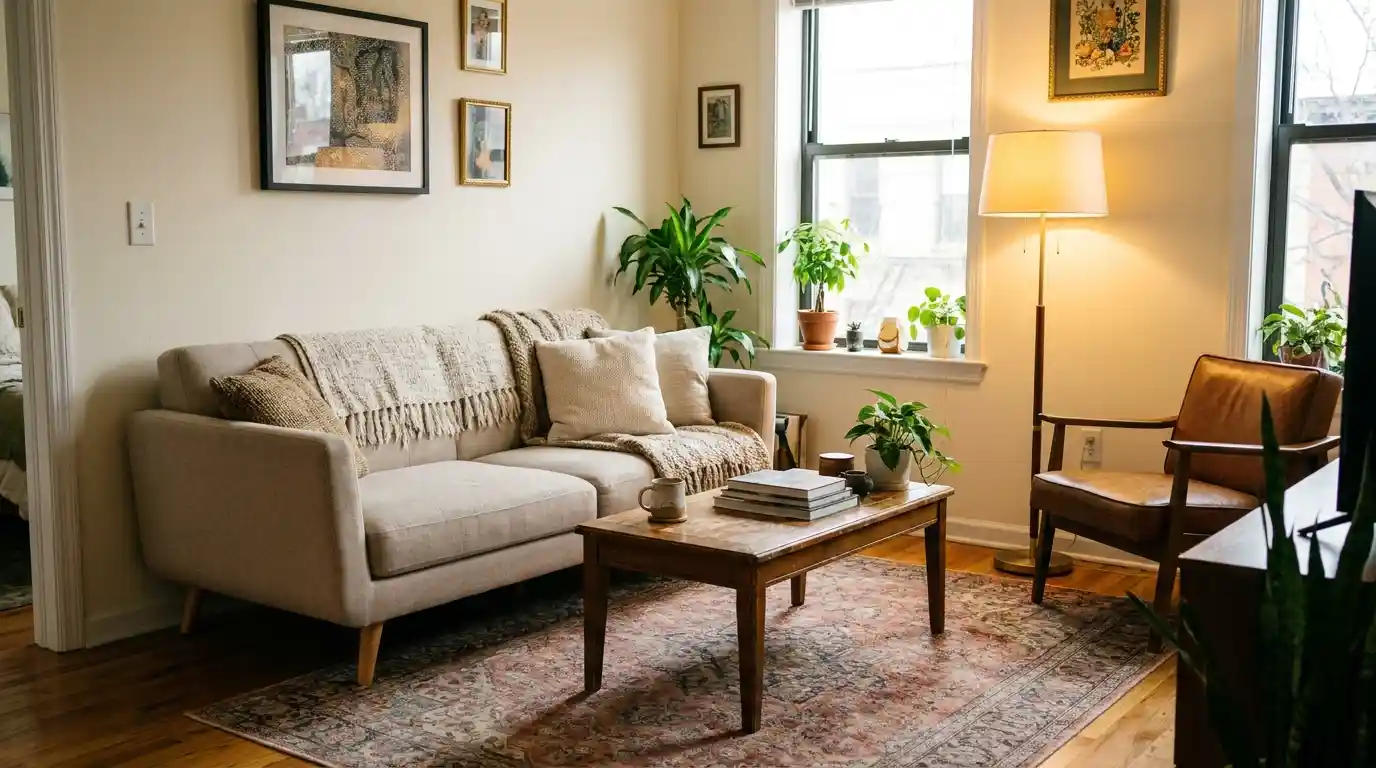
My sister moved into her first apartment last spring with $1,500 total for the living room, sofa included. She braced herself for mismatched pieces and a sofa that would sag within a year. Didn’t happen. She overspent on the sofa on purpose and cut corners everywhere else, and somehow the room came together better than either of us expected walking in.
The Sofa Ate Most of the Money
She put about $600 into the sofa alone, easily the biggest single item. There’s a rough rule some designers use, close to 40 percent of a living room budget on the sofa, 20 on a rug, the rest split across lighting and smaller pieces. She hadn’t heard of this rule going in. Her spending landed close to it anyway, mostly instinct.
The sofa mattered because it gets used every single day. She checked the frame before buying, skipped anything listing particleboard, went with a kiln-dried hardwood frame instead. Those frames can last well over a decade with normal use. Particleboard often gives out within a few years.
Her first attempt almost went wrong here. A sofa she’d nearly ordered listed nothing about frame material or cushion density at all, just photos and a price. A friend flagged this as a red flag before she hit checkout. Vague listings like that tend to hide cheap foam or particleboard construction underneath.
Cushion foam density turned out to matter more than she expected too. Foam above roughly 1.8 pounds per cubic foot holds its shape a lot longer than the cheap stuff, which flattens within a year of regular sitting. She paid slightly more for a sofa listing that spec clearly. Called it insurance against buying the same couch twice.
She Measured the Room Before Anything Else
Almost skipped this out of impatience, actually did it anyway at the last minute. Her room came in around 12 by 15 feet. That size comfortably fits a sofa somewhere between 72 and 84 inches without eating the whole walkway.
Walkway clearance surprised her more than the sofa math did. About 30 inches between pieces keeps a room from feeling cramped. She’d nearly ordered a sectional that would’ve swallowed that space entirely. Switched to a smaller sofa with visible legs instead. Same rough square footage of furniture, room felt noticeably more open once the legs were visible underneath.
Secondhand Covered What the Sofa Didn’t Need To
Coffee table and side table both came off a local marketplace app, under $80 combined. She checked both in person first, wobbled the frames by hand, looked for water stains or loose joints before paying anything.
This split, new sofa plus secondhand smaller pieces, let her put real money where daily wear actually happens. A coffee table just doesn’t take the abuse a sofa does. A solid secondhand one holds up fine next to something new costing triple.
Months Later, Here’s What Actually Held Up
Sofa’s held up well. No sagging yet, cushions still bounce back like day one. The secondhand coffee table needed one screw tightened after a few months, a five-minute fix and nothing close to a real problem.
One disappointment though, a floor lamp she bought without checking the base weight. Tips over if you bump the cord even slightly. She’d skip that specific purchase doing it again, small reminder that even the cheap stuff benefits from the same five minutes of checking she gave the sofa.
Conclusion
Budget living room furniture works best when the spending follows priority instead of splitting evenly across every category. My sister’s sofa took the biggest cut of her $1,500. Checking frame material and foam density before buying saved her from an early replacement. Measuring the actual room first stopped an oversized sectional mistake before it happened, and mixing secondhand smaller pieces with one solid new sofa stretched the money further than buying everything new ever would have.
Frequently Asked Questions
How much should I spend on budget living room furniture for a first apartment?
A full setup, sofa included, can realistically run $800 to $2,000 depending on size and quality. A rough 40-20-20-20 split across sofa, rug, lighting, and accessories helps prioritize the piece that sees the most daily use.
Is cheap living room furniture actually durable?
It comes down to specific materials, not price tag alone. A kiln-dried hardwood frame and foam density above 1.8 pounds per cubic foot both predict longer durability no matter what the sofa costs. Checking these two specs before buying catches most furniture that would otherwise need replacing within a year or two.
What size sofa fits a small living room?
Sofas in the 60 to 75 inch range generally fit smaller rooms comfortably, while a larger space around 12 by 15 feet can handle something closer to 72 to 84 inches. Leaving at least 30 inches of walkway clearance around any seating matters more for how spacious a room actually feels than the exact sofa size.
Should I buy secondhand or new furniture for a budget living room?
A mix usually works best, new for high-use items like the sofa, secondhand for smaller pieces like coffee tables. Check any used piece’s frame stability and look for water damage before handing over cash.

1 thought on “Budget Living Room Furniture: 6 Rules That Kept My Sister Under $1,500”