
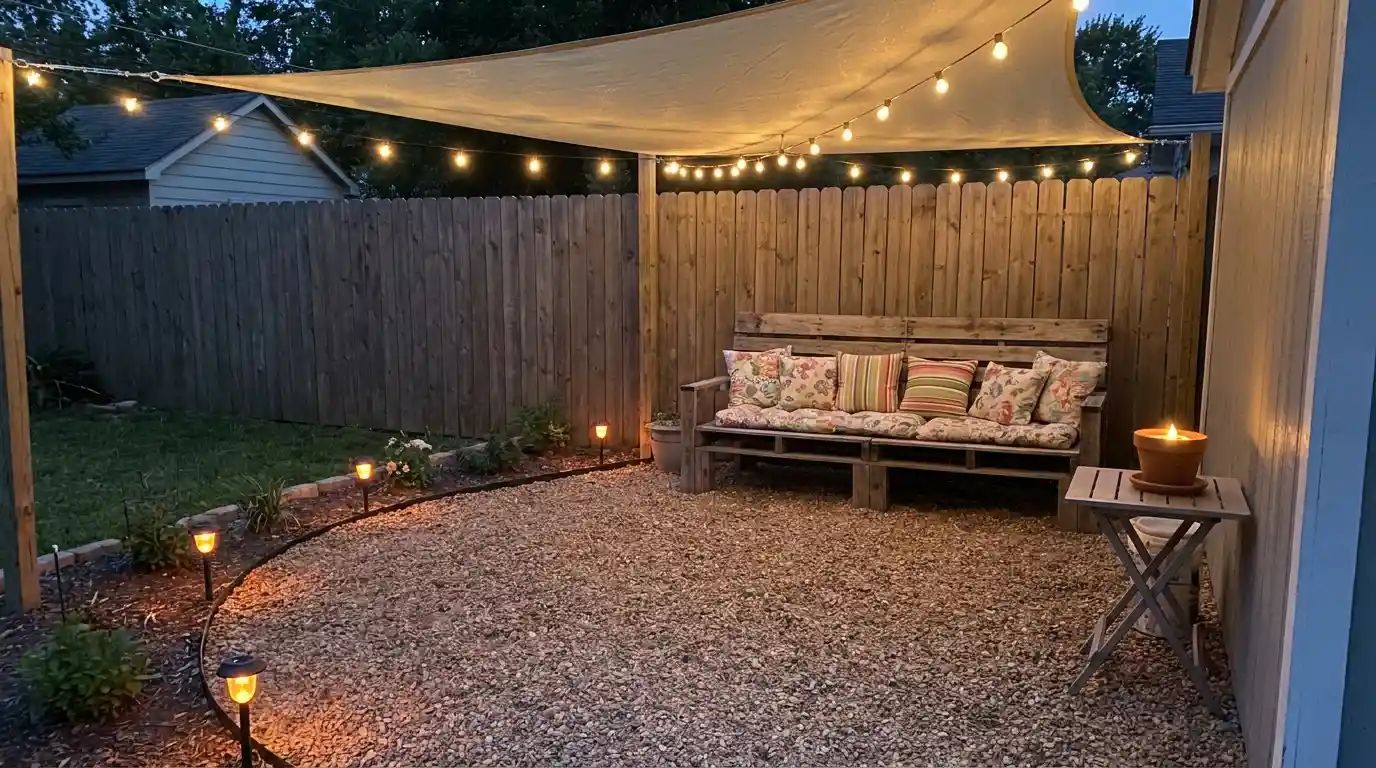
My brother texted me a photo of his backyard back in March, weeds up past the fence line, a rusted grill nobody had touched in two summers. He wanted it usable by July for his kid’s birthday party. No contractor, no real budget beyond what he could scrape together weekend to weekend. Four months later that same backyard had a gravel patio, a pallet bench, string lights, and a shade sail that actually worked. Total cost landed under $700 for the whole thing. This piece walks through what he actually built, what it cost him project by project, and where the corners he cut held up fine versus where they didn’t.
The Patio Came First, and Gravel Won
He looked at concrete first, priced it out around $150 including installation for the cheapest option a local contractor quoted him. Pavers ran higher once he added up materials at $5 to $8 a square foot. Gravel won mostly because he could do it himself over one long weekend instead of scheduling anyone.
He dug down about six inches, packed in four inches of rough base gravel, then topped it with an inch or two of pea gravel on top. Total materials for his roughly 10×12 space came in under $500, closer to $300 once he found a landscaping supplier selling leftover pallets of gravel at a discount. The only real downside so far, gravel migrates. He’s re-raked the edges twice since July.
Is Gravel Cheaper Than Concrete for a Budget Patio?
Yes, usually, especially for a DIY installation where you’re skipping labor costs entirely. Concrete runs around $150 for the most basic option including professional installation, while gravel materials alone often land under $5 per square foot for a comparable area. The tradeoff is maintenance, gravel needs occasional raking and edge upkeep that a poured concrete surface doesn’t.
Furniture Came From a Pallet, Some Paint, and One Rule
He’d priced a basic patio set online first, most landing somewhere between $200 and $500 for anything decent. Instead he grabbed three free pallets off Facebook Marketplace, sanded them down over a Saturday afternoon, and built a simple bench with a cinder block base on each end.
The rule he stuck to, one he actually told me about unprompted, was buying nothing new that a scrap pile could solve first. Cinder blocks ran him about $2 to $4 each from Home Depot. Paint was leftover from a garage project years earlier. Total furniture cost sat around $60, cushions included, which he found secondhand at a garage sale two streets over.
Lighting Was the Cheapest Upgrade With the Biggest Payoff
String lights and two folding chairs did it. Bare gravel turned into something that actually read as an outdoor room, all for under $200. Solar pathway lights lined the edge too, ten to fifteen bucks each. No wiring. No electrician. Just stakes pushed into the dirt at dusk on the first night he tried it.
He said the lighting mattered more than he’d guessed going in. Furniture alone still reads unfinished once the sun drops. He hadn’t expected a string of cheap solar stakes to fix that, but it did, for less than one dinner out would’ve cost him.
What’s the Most Affordable Way to Light a Backyard Patio?
Solar pathway lights plus a string of outdoor bulbs, that combo covers most small patios for under $50 total. My brother’s setup ran him closer to $40 once he added it all up. No outlet needed anywhere, no electrician, just stakes and one extension cord for the string lights themselves.
Shade Turned Out to Be the Hardest Problem to Solve Cheap
This is where his budget almost broke. A real pergola with a fabric canopy starts around $400 and climbs past $1,800 fast depending on size and material, way more than he wanted to spend on shade alone. Retractable awnings run higher still, sometimes into the thousands, he checked and immediately closed the tab.
He landed on a single triangular shade sail instead, roughly 80 to 100 square feet, which he found for around $50 on sale. Mounting hardware, turnbuckles and some cable, added maybe $30 more. It blocks somewhere around 90 to 95 percent of direct sun according to the manufacturer’s listing, close enough to full shade that nobody complained at the party in July. Lifespan is the tradeoff, shade sails typically last five to ten years compared to twenty or more for a real pergola structure.
How Much Does Backyard Shade Cost on a Tight Budget?
A single shade sail is the cheapest real option, often $50 to $100 for materials covering roughly 80 to 100 square feet. A DIY PVC frame with a tarp stretched across it can run even lower, sometimes under $50 total, though it won’t last nearly as long or handle wind as well. Full pergolas and retractable awnings offer more durability but start at several hundred dollars and climb fast from there.
What He’d Do Differently Next Time
He told me flat out he underestimated how much the small stuff would add up, the paver sand, the extra screws, a trip back to the hardware store he hadn’t planned for. Budgeting an extra ten to fifteen percent beyond whatever the initial project list suggests would’ve saved him a couple of annoyed Saturday mornings.
The gravel patio held up better than he expected honestly. The shade sail he’d probably size up next time, something covering more of the actual seating area, not just the center where the table sits. Small complaint given what the whole project actually cost him.
Conclusion
Outdoor living space ideas on a budget mostly come down to picking the right corners to cut and the right ones to leave alone. My brother’s backyard cost him under $700 total, gravel over concrete, a pallet bench over anything store-bought, solar lights instead of wiring anything in. The shade sail was the one splurge that still counted as cheap relative to the alternatives. None of it required a contractor, and most of it came together across a handful of weekends, no single big expensive push involved at all.
Frequently Asked Questions
What’s the cheapest way to create an outdoor living space?
Gravel patios, pallet furniture, and solar lighting together typically form the cheapest reliable combination, often totaling under $700 for a small backyard setup. Sourcing furniture secondhand or from pallets instead of buying new tends to be the single biggest cost saver in most budget backyard projects.
How much does a small budget patio typically cost?
A basic gravel patio for a space around 10×12 feet often costs $300 to $500 in materials when installed yourself. Concrete and pavers cost more per square foot, though concrete can be cheaper upfront if you’re paying for professional installation on a small area.
Is DIY shade cheaper than a pergola for a backyard?
Yes, a single shade sail or a simple tarp-and-frame setup usually costs a fraction of a full pergola, often under $100 compared to $400 or more. The tradeoff is durability, shade sails typically last five to ten years while a well-built pergola can last two decades or longer.
Can you create a nice outdoor living space without buying new furniture?
Yes, pallet furniture, secondhand patio sets from garage sales or marketplace listings, and painted cinder block benches are common ways to furnish a space for a fraction of retail cost. Many budget backyard makeovers rely almost entirely on free or reclaimed materials for seating specifically.

2 thoughts on “Outdoor Living Space Ideas on a Budget: 7 Projects That Actually Stayed Cheap”